
Timeline
Scroll through nearly two centuries. Every vessel stands on the day she was lost or hit; the wide blocks are the conflicts themselves and the events that set them off.
1830
1830–1839
Independence and the closing of the Scheldt
No ship lost in action, and still the heaviest blow: Antwerp was cut off from the sea and stayed cut off for thirty years. read on →
1914
1914–1918
The First World War
The fleet's worst war. Almost the whole coastal fishery fled to England; 74 fishermen died and the merchant navy lost forty per cent of its tonnage. read on →
1915
2 June 1915
O.171 Delta B
sunk by gunfire from U-34 eighteen miles SW by W of the Bishop Rock lighthouse; all eleven aboard were saved by the patrol vessel Devonland
11 crew
1916
7 December 1916
S/S Keltier
on passage from Newcastle in New Brunswick to Calais with a cargo of timber, torpedoed by UB-29 forty-five miles west of the Scilly Islands; she stayed afloat, was towed into Falmouth and was back at sea five days later
26 December 1916
O.126 Neptune
stopped twenty-five miles SW by W of St Ann’s Head; the scuttling charges in the hold failed to go off, so she was sunk by four rounds of gunfire; the crew came away unhurt but lost every stitch of their sea kit
11 crew
1917
22 January 1917
S/S Euphrates
on passage from Barry to New York in ballast, torpedoed by U 57 about two hundred miles south-west of the Fastnet; most of the crew drowned. The Relief Commission did not hear of it until 3 February, and put it to the German government that it had happened before the expiry of the very period they had themselves declared safe
30 January 1917
O.8 Marcelle
shelled by a submarine twenty miles off Trevose Head; the third round carried away the bridge, a hit burst the boiler, and after an hour’s shelling she went down stern first; the eleven aboard rowed away in a leaking boat and were picked up by the smack The Sweet Heather
11 crew
16 March 1917
S/S Haelen
in ballast from Rotterdam for New York on the safe lane, carrying all the Commission’s markings together with a safe-conduct from the German Minister at The Hague, shelled by a German submarine; six of her crew were killed and she was so badly damaged that she had to put into a Norwegian port for repairs
6 lost
16 March 1917
S/S Tunisie
in ballast from Rotterdam for New York on the safe lane in company with the Haelen, carrying all the Commission’s markings and a safe-conduct, shelled by the same submarine; she got away
17 March 1917
S/S Ministre de Smet de Naeyer
outward bound in ballast, carrying the Commission’s markings and, as always, a safe-conduct from the German Minister at The Hague, shelled by a submarine in the North Sea; she got away
4 April 1917
S/S Trevier
carrying 4,396 tons of wheat, torpedoed in broad daylight without warning ten miles off the Dutch coast and inside the so-called safe lane; six of the crew were seriously wounded by shellfire after they had taken to the boats
8 April 1917
S/S Camilla
inward bound for Rotterdam with 2,600 tons of wheat on the so-called safe lane, torpedoed without warning
10 September 1917
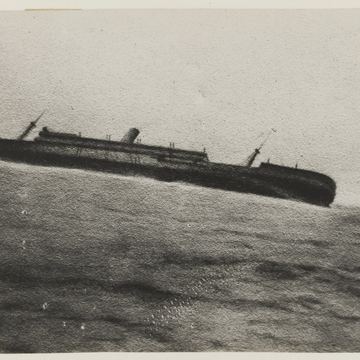
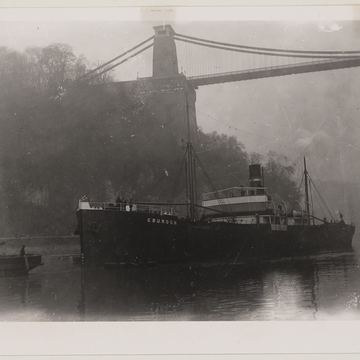
S/S Eburoon
stranded and lost in Trepassey Bay, Newfoundland; she was sailing for the Commission for Relief in Belgium and carried the words BELGIAN RELIEF along her whole length
1918
3 January 1918
O.131 John
rammed at about nine in the evening by the O.55 Le Compte Horace Vanderburgh and sunk within minutes in 51°30′ N, 5°53′ W; six of those aboard were lost
13 crew6 lost
24 April 1918
O.170 Delta A
unarmed; sunk by gunfire eighteen miles south of St Kilda, all sixteen aboard were saved
2 October 1918
S/S Keltier
on passage from Milford Haven to New York in ballast, torpedoed and sunk by U-55 two hundred and ninety miles south-west of Brest
25 lost
1939
1939–1945
The Second World War
The core of this database: sixty-six crew lists, the ships that were lost and the people who were aboard. read on →
3 September 1939
Britain and France declare war on Germany
Belgium stays neutral. The sea does not: twelve days later the Alex van Opstal strikes a mine.
8 December 1939
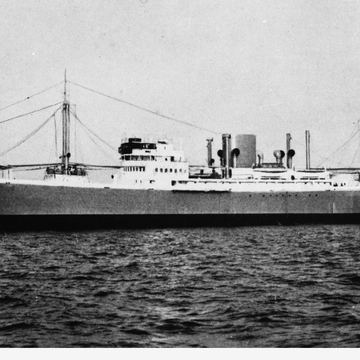
ADOUR
Stranded and lost on the French coast on 8 December 1939, the coastal lights having been extinguished for the war.
1940
21 February 1940
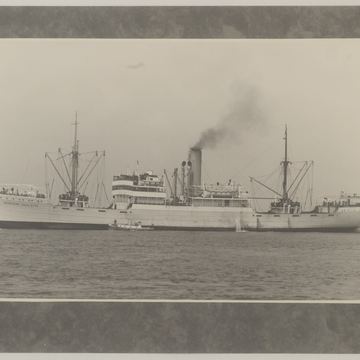
The training ship Mercator leaves Ostend
Seventy-five aboard for a voyage of four months. For most of them it became six years, and for the ship seven.
10 May 1940
Germany invades Belgium, the Netherlands and Luxembourg
The next day the Belgian Shipping Advisory Committee is set up at the London embassy, with oversight of every Belgian ship beyond German reach.
17 May 1940
The merchant fleet is requisitioned
The order goes from Brussels to London and from there to consuls around the world. The ships now sail for the government, not for their owners.
28 May 1940
The Belgian army capitulates
The ports are occupied. Anyone at sea can no longer go home.
1 June 1940
The Mercator reaches Banana in the Belgian Congo
After the capitulation Commandant Van de Sande sails for the only Belgian soil left. The ship would lie there for nearly three years.
4 June 1940
The Dunkirk evacuation ends
A week later four Belgian ships lie on the bottom off the Normandy coast, three of them on the same day.
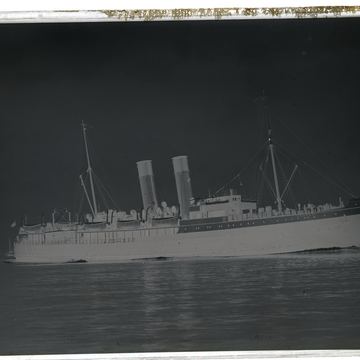
2 September 1940
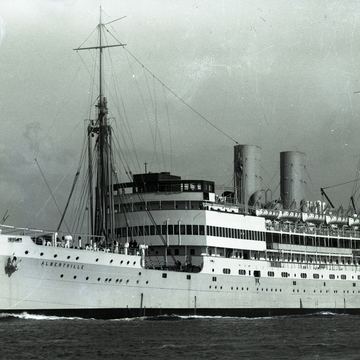
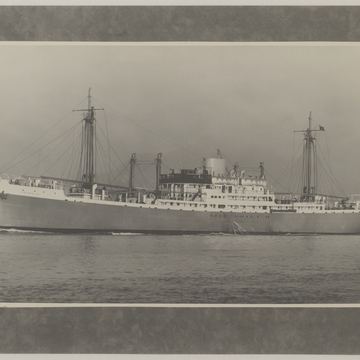
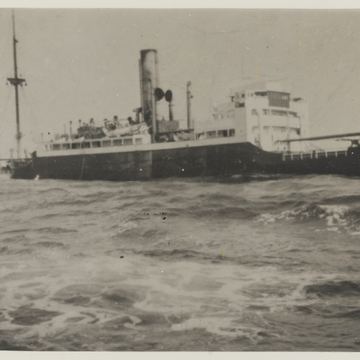
VILLE DE MONS
Torpedoed and sunk on 2 September 1940 in the same waters as the Ville de Hasselt.
October 1940
The government establishes itself in London
Prime Minister Pierlot had declined the British offer of 20 June. For five months the fleet was run by a committee at the embassy.
November 1940
The Belgian Marine is formed
The army loans men to work the guns on the merchant ships. They are trained at Liverpool and sail with them from now on.
1941
1 February 1941
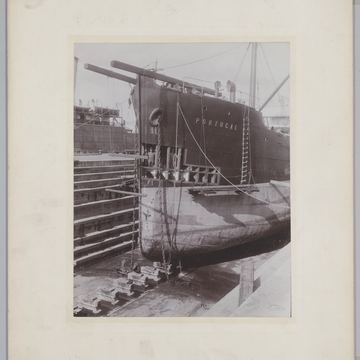
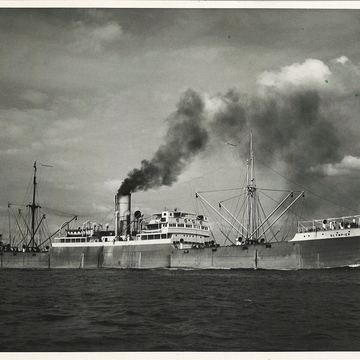
PALLIETER
Lost in heavy weather off the Mersey on 1 February 1941 after her cargo shifted.
15 February 1941
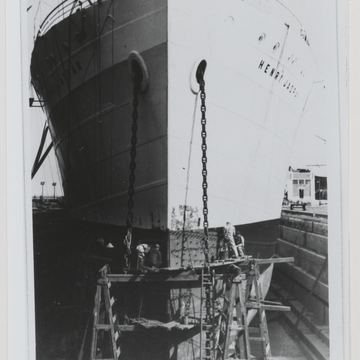
MARGUERITE
Sunk after a collision at night in convoy off Flamborough Head on 15 February 1941.
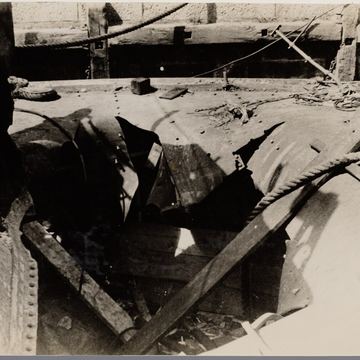
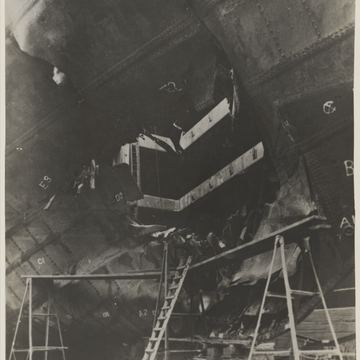
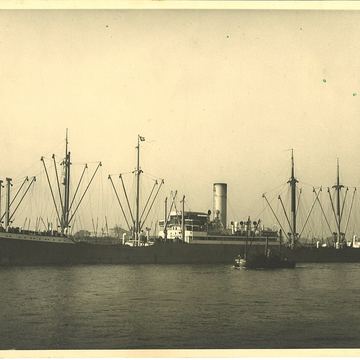
15 July 1941
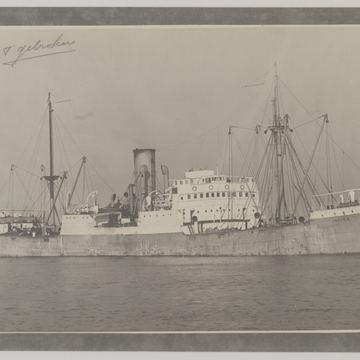
PRINCE PHILIPPE
A new packet, evacuated unfinished from Hoboken to England on 13 May 1940. Sunk by collision in the Irish Sea on the night of 15 July 1941. She was in British service under the White Ensign.
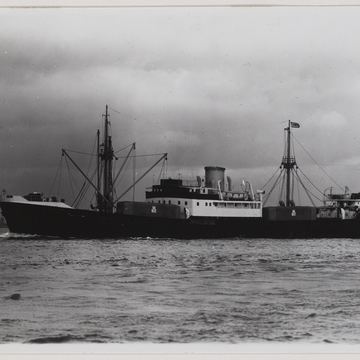
5 September 1941
M/V JOHAN
Sunk in the Atlantic on 5 September 1941 by explosive charges from a submarine. She had been sold under a right of repurchase and sailed under the Panamanian flag as Trinidad. In 1940 and 1941 she landed secret agents in North Africa, and on 10 May 1940 she slipped out of Dordrecht while the enemy held the railway bridge.
7 December 1941
Pearl Harbor: the United States enters the war
The U-boats move their hunting to the American east coast. 1942 becomes the year of the heaviest losses among crews.
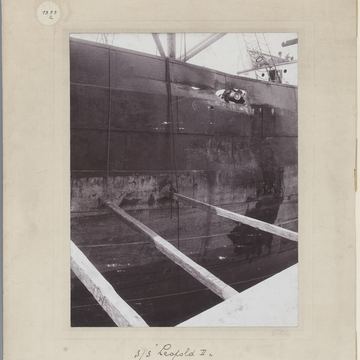
1942
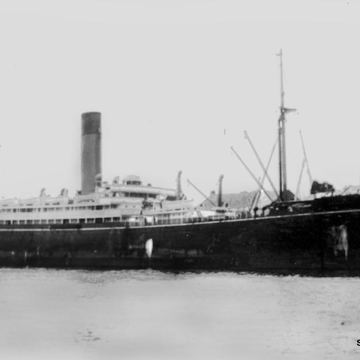
14 March 1942
BRABO
Sunk on 14 March 1942 entering Newcastle after a collision. She was the last ship out of Antwerp on 14 May 1940; that she did not fall into enemy hands intact was the work of chief engineer Van Bauwel.
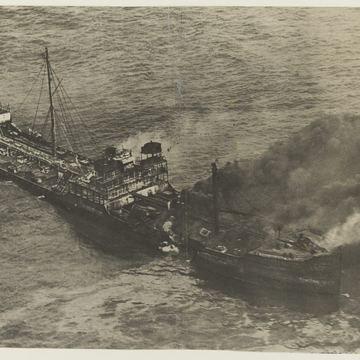
18 June 1942
TURQUOISE
Captured by the occupier. Chased by British motor launches on 18 June 1942 and forced to tear herself open on the rocks around Port-en-Bessin.
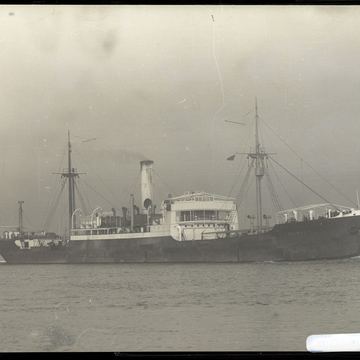
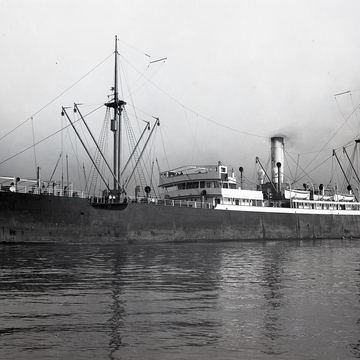
20 September 1942
DIAMANT
Captured by the occupier. Lost on the rocks near Saint Helier during a storm on 20 September 1942.
1943
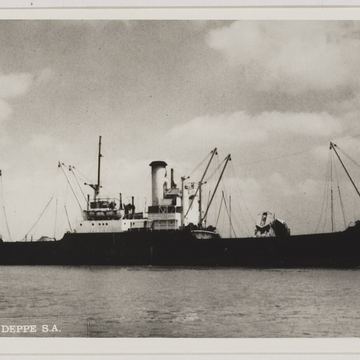
8 February 1943
The Mercator becomes H.M.S. Mercator
Chartered by the British Admiralty she enters Freetown and comes under the White Ensign, as a rest ship for submarine crews.
13 March 1943
LIEGE
One of the five ships conditionally released by the Hamburg prize court. Sunk by a British motor torpedo boat in the North Sea on 13 March 1943.
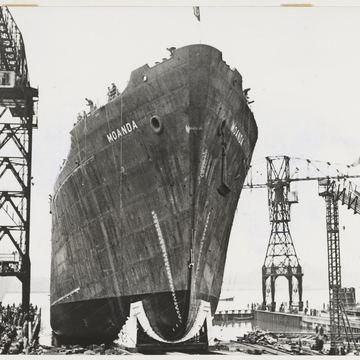
24 May 1943
The U-boats leave the North Atlantic
After that month’s losses Dönitz withdraws his boats. From here the losses in this timeline noticeably thin out.
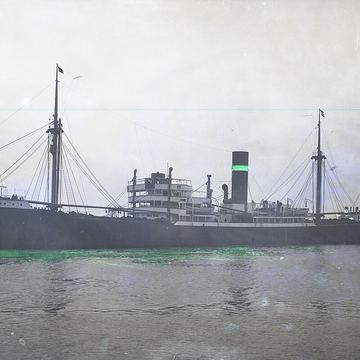
1944
8 April 1944
BIZON
Sunk by a British motor launch in the Channel Islands on 8 April 1944. She was then in German service, although the Hamburg prize court had released her.
6 June 1944
D-Day: Operation Overlord
Three Belgian ships take part: the Belgique, the Julia and the Marcel.
29 July 1944
PRINCE LEOPOLD
Mined and lost near the Nab Tower on 29 July 1944. She was in British service under the White Ensign.
4 September 1944
Antwerp liberated
The port falls into Allied hands almost undamaged, but the Scheldt below it is still German and full of mines.
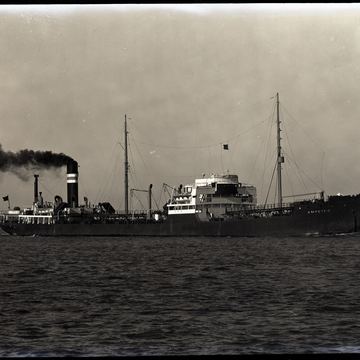
28 November 1944
The first convoy enters Antwerp
After the Battle of the Scheldt and the sweeping of the river, the port is at last open to supply the Allied armies.
16 December 1944
The Ardennes offensive begins
American troops are needed at the front in a hurry. Eight days later the Leopoldville crosses the Channel with more than two thousand soldiers.
1945
12 April 1945
ALCA
Requisitioned by the occupier at Boel and taken into service as Sperrbrecher 185 Hansburg. Lost in dry dock 5 at Wilhelmshaven in the air raid of 12 April 1945.
2 May 1945
FLORIDA
One of the hulls seized by the occupier at Cockerill. Sunk by the RAF in the Baltic on 2 May 1945, with a cargo of torpedoes aboard.
8 May 1945
German surrender
The war at sea does not end with it: the last ship in this timeline is lost in July.
1947
18 January 1947
The Mercator comes home
In tow of the deep-sea tug Empire Mary the training ship sees the Scheldt again, a hulk. Seven years after a voyage planned for four months. She is the last Belgian merchant ship to come home from this war.
1950
1950–1953
The Korean War
The Belgian volunteer corps sailed from Antwerp to Pusan aboard the state vessel Kamina. No merchant loss is known. read on →
1960
1960
The Congo Crisis
The CMB's Congo liners carried evacuees away, but the armed action at Matadi was naval, not merchant. read on →
1980
1980–1988
The Gulf tanker war
Iran and Iraq attacked shipping 451 times between them. Belgium sent minehunters, and the Belgian tanker Naess Leopard was hit herself by two Iranian rockets. read on →
1985
18 August 1985
M/T Naess Leopard
hit by two rockets from Iranian aircraft; the crew accommodation caught fire
1990
1990–1991
The Gulf War
Minehunters again: Operation Southern Breeze, and afterwards command of a Belgian-French-Dutch clearance group. read on →
2009
2009
Piracy: the Pompei
Ten crew held for more than seventy days by Somali pirates. It led to the first conviction of a pirate kingpin in Europe. read on →